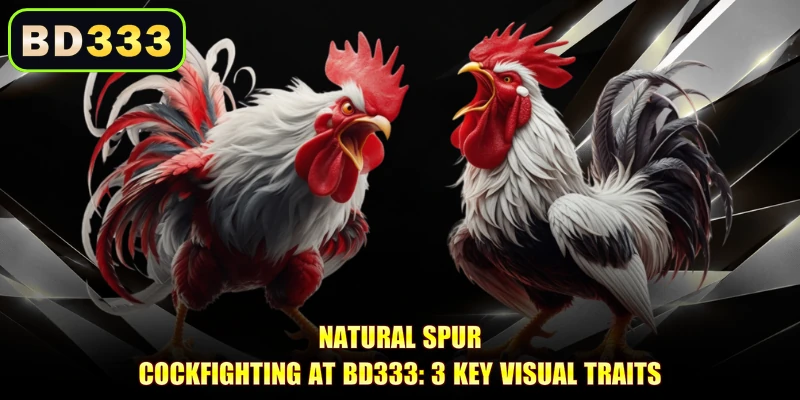
Natural spur cockfighting attracts interest through a traditional format in which birds rely on their unmodified spurs. Reading match rules and examining physical traits helps viewers follow each contest. This BD333 guide outlines betting categories and typical judging issues without promising any outcome.
Understanding natural spur cockfighting at BD333
In this traditional format, competing roosters use the spurs that grow naturally on their legs rather than fitted metal blades. Those natural projections remain unsharpened and are not replaced by artificial weapons. The contest therefore places greater emphasis on movement, balance, stamina, and the accuracy of each bird’s actions. Handlers also pay attention to conditioning, because physical resilience may influence how a rooster performs throughout successive rounds.
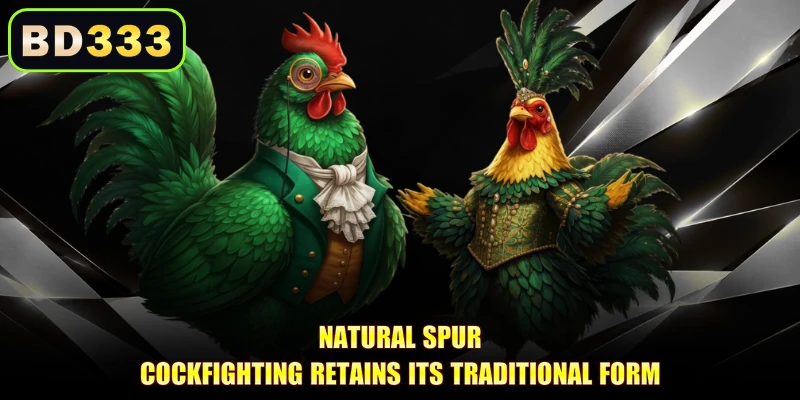
Natural spur cockfighting involves birds whose striking ability reflects inherited characteristics, daily care, and their prior physical conditioning. Experienced handlers may assess spur position and leg development alongside overall health before a match. Unlike events using attached steel or knife spurs, this format highlights endurance and positioning rather than relying mainly on equipment.
Natural spur cockfighting may give spectators longer opportunities to observe footwork, defensive reactions, and the way each rooster responds under pressure. Unmodified spurs preserve a recognizable feature of the traditional competition, while the contest still depends on many changing factors. A bird with quick movement can appear promising yet struggle against an opponent with greater balance or endurance. Such differences explain why careful observation matters more than confident predictions.
Natural spur cockfighting rules and common odds
Understanding the rules of natural spur cockfighting and reading the displayed markets provides a clearer picture of how results are classified. Visitors should check each venue’s conditions before interpreting a wager. Match schedules, judging authority, and settlement procedures may differ between organizers. These sections summarize customary practices without guaranteeing results.
Round duration and referee responsibilities
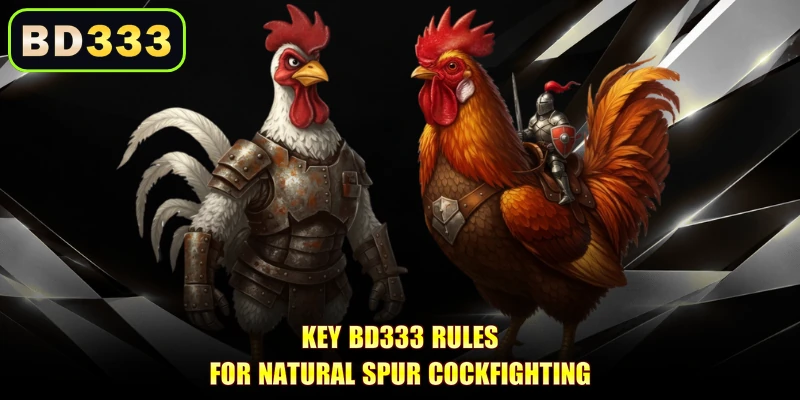
Each natural spur cockfighting event follows the regulations established by its organizer, including scheduled rounds and rest intervals. Breaks allow handlers to assess their birds and provide permitted care. Referees monitor the contest, judge whether either rooster can continue, and apply the stated criteria when deciding outcomes. Actual timing can change according to the competition format, so published rules remain the primary reference.
| Item | Detailed regulation |
| Round duration | One round is described as lasting roughly 15 minutes. A rest period of about 3–5 minutes may follow, allowing examination and permitted care. Exact intervals depend on the venue’s rules and the competition format. |
| Referee authority | The official assesses the action in the ring, including the birds’ reactions, condition, and ability to continue. Decisions are made using the published rules rather than predictions from spectators or handlers. |
See more: Both dead draw: 3 key features and payout examples at BD333
How the main betting markets are classified
The event’s betting board normally separates possible results into three broad selections: Meron, Wala, and BDD. Each category identifies an outcome rather than guaranteeing a particular return. Displayed prices reflect the organizer’s current market and may change before the contest begins. Check official settlement definitions instead of relying on appearance alone.
| Market | Meaning | Natural spur cockfighting notes |
| Meron | A selection that the banker-side rooster will win the match under the stated settlement rules. | The nominated bird may be regarded as stronger in build or recent form. The quoted payout can therefore be lower, but pricing depends on the current board. |
| Wala | A selection that the player-side rooster will defeat its opponent according to the official result. | This side may carry a higher quoted return if considered the underdog. A promising style or unexpected movement does not establish the likelihood of victory. |
| BDD | A selection for a drawn outcome, sometimes described as both dead or no decisive winner. | A draw may be quoted as high as 8 to 1 because this outcome is considered uncommon. Check the active market for its precise definitions and odds. |
Common rule breaches and possible penalties
During natural spur cockfighting, handling teams are expected to respect entry times, authorized breaks, and the referee’s instructions. Potential violations include bringing a rooster into the ring late, delaying a restart, or using prohibited substances. Interfering with an official decision may also trigger disciplinary measures. Organizers determine the response under their specific rulebook, so examples should not be treated as universal sanctions for every venue.
● One common warning sign is a handler who repeatedly misses the required return time or deliberately extends a rest interval. Officials may first issue a reminder or formal warning. If the behavior continues, the published regulations may permit a technical loss. Clear timestamps and referee announcements help viewers understand why a decision was recorded without confusing a procedural penalty with the contest’s sporting result.
● A sixty-second limit may apply after an official instruction, with repeated delays potentially resulting in a technical defeat. The exact threshold depends on each event’s published rules. A referee may also consider whether a delay was unavoidable or involved a genuine safety concern.
Assessing birds and avoiding common errors
Experienced observers often evaluate overall body structure, head carriage, and leg condition rather than focusing on one impressive feature. At BD333, readers can compare these visible characteristics with match descriptions and stated regulations. Still, individual traits provide context, not proof of future performance. Overconfidence, overlooking an opponent’s condition, or ignoring differences between competition formats can lead to weak assessments.
| Feature | Characteristics spectators often notice | Reported significance |
| Overall frame | A compact, balanced body with a broad chest, deep keel, and well-aligned joints can suggest physical conditioning. Observers should consider the whole bird rather than one measurement. | Traditionally considered very important for endurance. |
| Head and eyes | A relatively narrow head, attentive eyes, and a firm, well-shaped beak are commonly cited as visible signs of alertness. They are not reliable performance guarantees. | Often considered important for responsiveness. |
| Legs and natural spurs | Dry-looking legs, tidy scales, and evenly positioned spurs can be evaluated alongside stance and mobility. Spur size alone does not determine a contest’s result. | Traditionally considered very important for striking ability. |
Conclusion
Natural spur cockfighting remains notable for its traditional rules, unmodified spurs, and the different physical qualities displayed by competing birds. Learning how referees make decisions, how markets are labeled, and which characteristics observers consider offers useful background. BD333 readers should consult specific event regulations and approach every claimed advantage critically, since observations alone cannot guarantee the outcome of a match.
